





Architectural AI in 2026: What It Can — and Cannot — Do for Designers
A Studio Naadi Perspective
Introduction: When AI Enters the Architecture Studio
In 2026, artificial intelligence has become part of architectural practice—not as a radical disruptor, but as a quiet presence in the background. It assists with imagery, simulations, and iterations, often blurring the line between tool and author.
At Studio Naadi, architecture does not begin with software. It begins with land, climate, people, and lived experience. AI is introduced later—as a supporting instrument in a deeply human process. These renders demonstrate how we use AI: to ask better questions, not to give final answers.
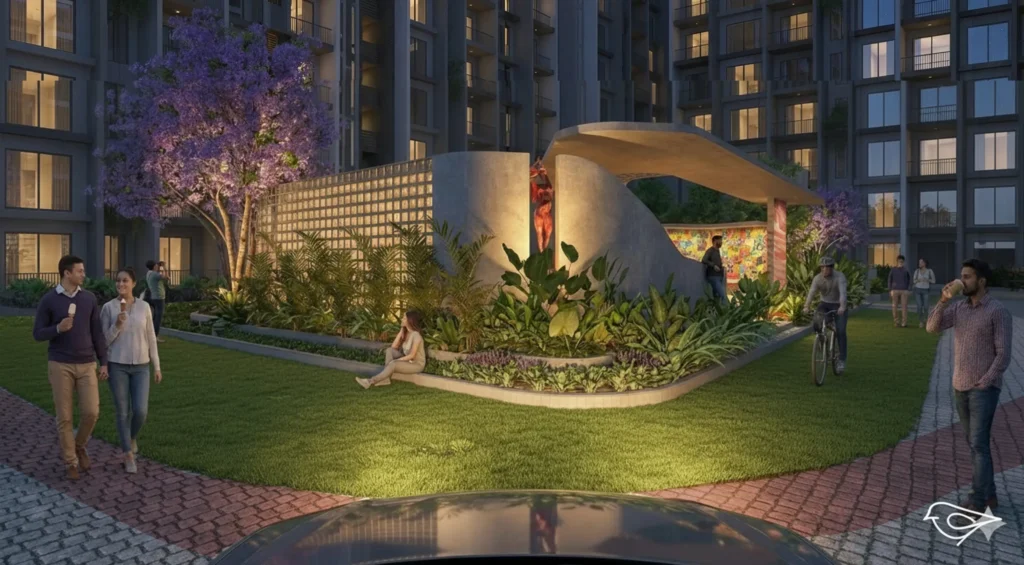
AI-assisted visual exploring human gathering and night-time spatial comfort.
AI as a Tool for Imagining Human Experience
AI-assisted renders allow us to test how people might gather, pause, and move through space. These visuals help evaluate scale, light, and comfort, especially in shared environments. However, decisions of intimacy, openness, and silence remain human judgments informed by social understanding and experience.

Early-stage exploration of pavilion, water, and landscape relationships.
Early Spatial Exploration
AI excels at generating multiple variations quickly, enabling us to explore relationships between built form, water, and landscape. This speed allows the studio to focus on refining intent rather than settling for the first visually pleasing outcome.
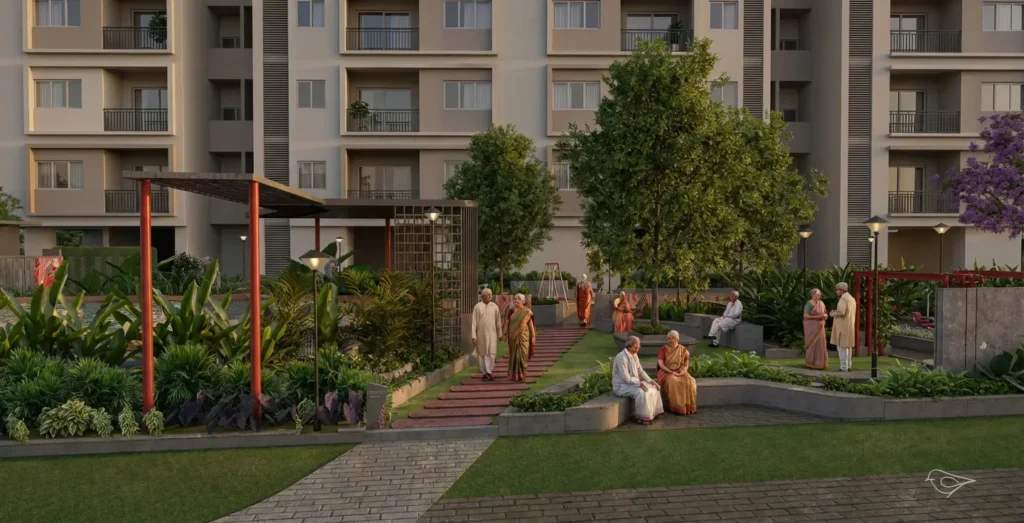
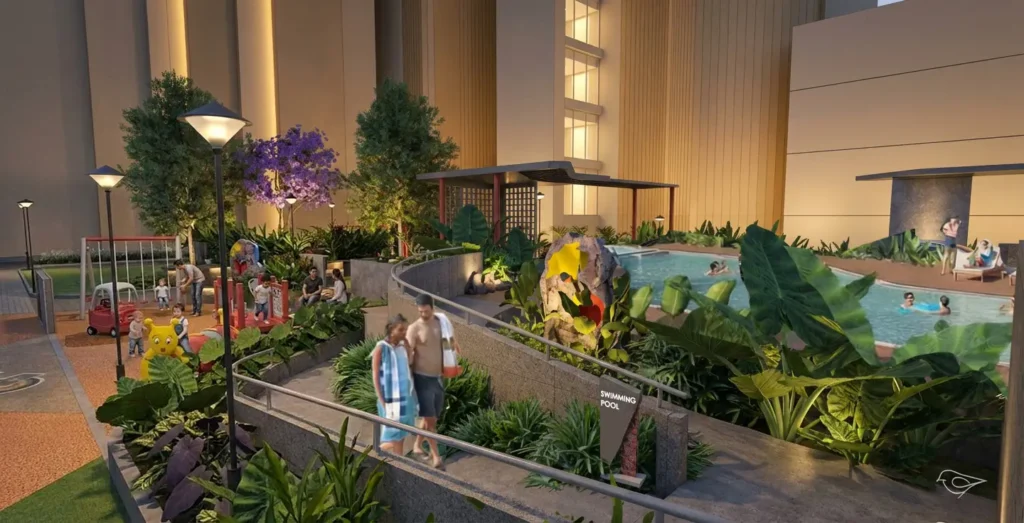
Study of daylight, shading, and walkability in a landscaped court.
Climate, Comfort, and Landscape Performance
In Bangalore’s climate, comfort is shaped by shade, breeze, and planting density. AI tools support simulations of daylight, shading, and walkability, helping quantify intuitive climate responses without replacing on-site observation.
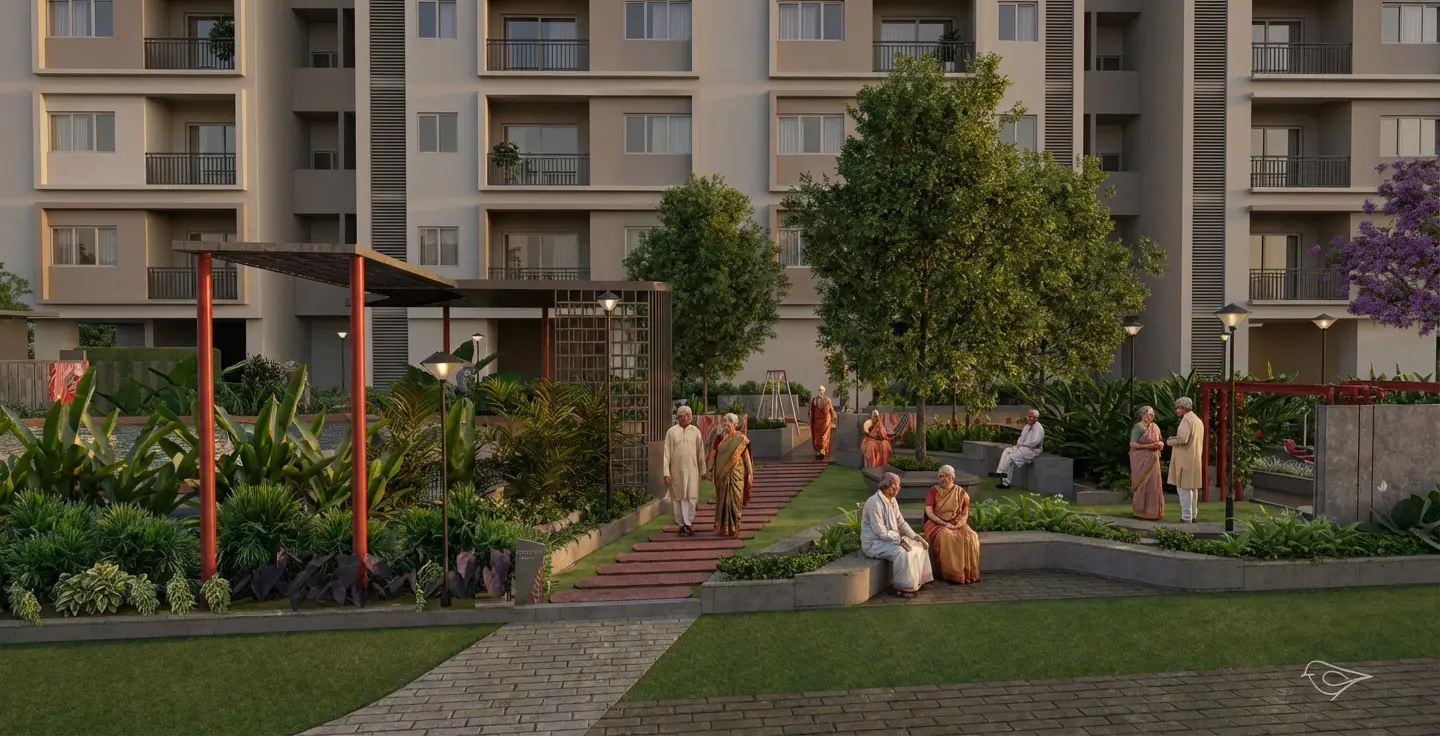
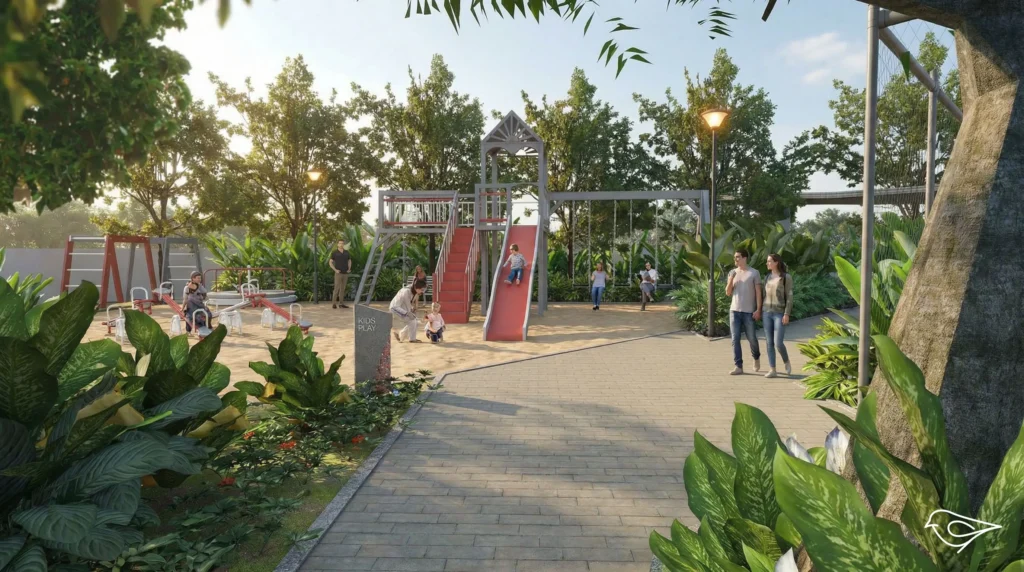
Exploring children’s play, visibility, and safety in shared landscapes.
Understanding Behaviour
AI can populate scenes with people, but it cannot understand behaviour—how children appropriate space, how elders observe from a distance, or how safety is felt rather than seen. These insights come from empathy and lived experience.
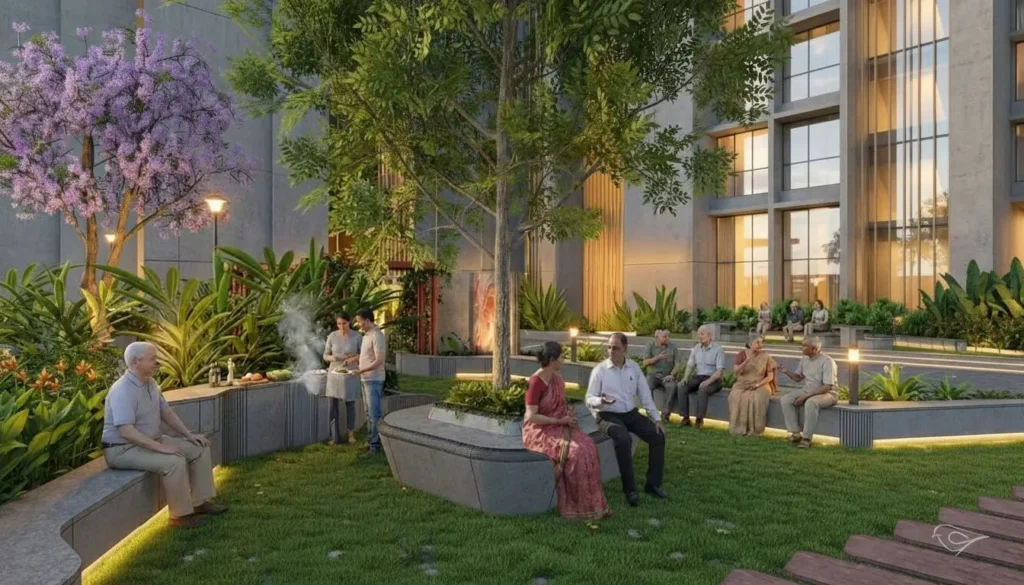
Multi-generational occupation of shared spaces.
Architecture as Cultural Space
Indian architecture is inherently social. Thresholds, shaded edges, and informal gathering zones carry cultural meaning. While AI can visualise people, cultural nuance is understood only through human engagement.
High-detail AI render used only as a discussion tool.
The Risk of Seductive Imagery
Highly polished AI imagery can be misleading. Without restraint, it risks homogenised aesthetics and context-blind luxury. At Studio Naadi, every AI image is questioned for buildability, necessity, and belonging.

Movement, permeability, and landscape continuity study.
Human-Led, AI-Assisted Design
Our approach remains intentional: human observation first, AI-assisted exploration second, and human judgment always. Ethics, restraint, and long-term sustainability guide final decisions.
What This Means for Our Clients
Clients benefit from informed decisions, faster exploration without compromise, and architecture rooted in context rather than trends. AI brings clarity, but care creates architecture.
Conclusion: The Future Is Deeply Human
AI will continue to evolve, but the responsibility of architects will only deepen. At Studio Naadi, we believe the future of architecture is deeply human—with intelligent tools quietly supporting thoughtful, ethical design.